Cape Town’s Most Photogenic Spots: Where Every Frame Feels Like a Dream
You know that feeling when you stumble upon a view so unreal, you’re convinced it’s been photoshopped? That’s Cape Town. Between the mist-kissed peaks, golden coastlines, and vibrant streets, this city doesn’t just invite photos—it demands them. I’ve chased sunsets here that painted the sky in colors I didn’t know existed. If you’re looking to capture moments that stop scrolls and steal breaths, you gotta see what makes this place a visual masterpiece. From mountain summits to coastal curves and cultural corners alive with color, Cape Town offers a photographer’s dream with every step. Whether you're holding a professional DSLR or simply using your smartphone, the city rewards attention, timing, and a willingness to wander.
Introduction to Cape Town’s Visual Magic
Cape Town is more than a destination—it’s a living gallery of natural and cultural artistry. Nestled between the Atlantic Ocean and dramatic mountain ranges, the city presents a rare blend of elements that photographers cherish: light, texture, contrast, and movement. Its geography alone tells a story—one of ancient rock formations shaped by wind and water, coastal plains kissed by endless sunlight, and urban neighborhoods pulsing with life. The city's unique positioning at the southwestern tip of Africa means it benefits from clean air, sharp visibility, and sunrises and sunsets that ignite the sky in radiant hues.
What truly sets Cape Town apart is its visual diversity within a compact space. Within a single day, you can photograph snow-dusted mountain peaks in the morning, penguins waddling across sandy shores by midday, and colorful alleyways glowing under golden afternoon light. This density of beauty makes it a favorite among travel photographers, influencers, and families alike who want to preserve their journeys in vivid detail. The city’s seasons also contribute to its photogenic charm. Spring brings blooming fynbos across the reserves, summer lights up the beaches with energy, autumn softens the landscape with warm tones, and winter drapes Table Mountain in a mystical blanket of cloud known as the 'tablecloth.'
But beyond postcard-perfect views, Cape Town invites deeper storytelling. It’s a city where history, resilience, and creativity intersect. Every photograph has the potential to capture not just a place, but a mood—a quiet moment on a windswept cliff, children laughing in a sunlit courtyard, or a fisherman mending nets at dawn. For the mindful traveler, the camera becomes a tool for connection, allowing you to slow down and truly see the soul of a place. In Cape Town, photography isn’t just about aesthetics; it’s about presence.
Table Mountain: The Crown Jewel of Scenic Vistas
No image of Cape Town feels complete without Table Mountain standing tall in the background. Its flat-topped summit, often shrouded in cloud, dominates the city skyline and serves as a constant visual anchor. Capturing this iconic landmark requires more than just pointing and shooting—it demands timing, perspective, and an understanding of light. The most breathtaking views come from vantage points that showcase both the mountain and the sprawling city below, such as the upper cable station, the lower slopes of Signal Hill, or the seaside promenade at Sea Point.
For photographers, the choice between hiking and taking the cable car affects not only the experience but the quality of light during shooting. A sunrise hike up Platteklip Gorge—though strenuous—offers the reward of golden light spilling over the city while the rest of the world is still asleep. The early morning air is crisp, the shadows are long, and the city lights fade into a soft blue glow. These conditions create depth and contrast in photos, making structures and landscapes stand out with clarity. On clear days, Robben Island becomes visible in the distance, adding historical and geographical context to wide-angle shots.
If hiking isn’t your preference, the cableway provides a smoother ascent with panoramic windows offering continuous photo opportunities during the ride. Once at the top, photographers should explore multiple angles. The northern edge overlooks the city center and harbor, ideal for wide compositions. The southern side faces the Atlantic and the Twelve Apostles mountain chain, perfect for capturing the rugged coastline. For dramatic depth, use foreground elements like rock formations or indigenous plants to lead the eye into the frame. A tripod is useful for long exposures, especially during twilight when city lights begin to sparkle.
Timing is crucial. Midday sun creates harsh contrasts and washed-out skies, so early morning or late afternoon remains optimal. Weekdays tend to be less crowded than weekends, giving you space to compose without distractions. Additionally, checking the weather forecast and wind conditions helps plan for clearer skies and safer shooting conditions. With patience and preparation, Table Mountain isn’t just a backdrop—it becomes the centerpiece of your visual journey through Cape Town.
Cape Point & the Cape of Good Hope: Wild Coastlines and Endless Horizons
Located at the tip of the Cape Peninsula within Table Mountain National Park, Cape Point and the Cape of Good Hope represent the raw, untamed beauty of South Africa’s coastline. Though not the southernmost point of Africa (that title belongs to Cape Agulhas), this area holds symbolic significance as the meeting place of the Atlantic and Indian Oceans—a fact visible in the dramatic shift in water color and wave patterns. The rugged cliffs, windswept fynbos, and crashing waves create a cinematic landscape that feels untouched by time.
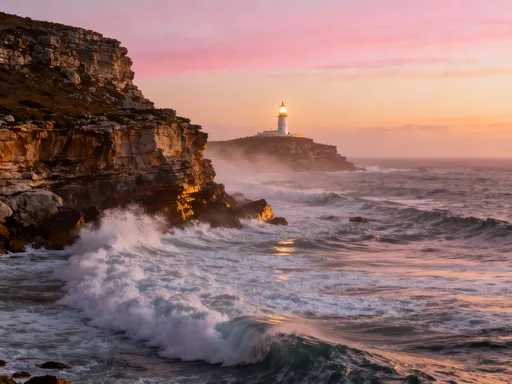
Photographers are drawn here for the sense of scale and solitude. The lighthouse perched high on the cliffs offers one of the most iconic compositions: a red-and-white striped tower against a backdrop of endless ocean and stormy skies. To avoid the crowds, arrive early in the morning when the park opens. The soft, diffused light enhances textures in the rock faces and brings out the rich greens of the native vegetation. Mist rolling in from the sea adds mood and mystery to images, especially when captured with a slightly longer exposure to blur motion.
Several walking trails lead to different viewpoints, each offering unique framing opportunities. The boardwalk trail to the old lighthouse provides sweeping views of the coastline, while the lower path near the ocean edge allows for dynamic shots of waves colliding with boulders. Use a polarizing filter to reduce glare on the water and enhance sky contrast, particularly on bright days. A wide-angle lens works well for capturing vast seascapes, while a telephoto can isolate distant elements like ships on the horizon or seabirds in flight.
One of the most photographed spots is the signpost marking the Cape of Good Hope. To avoid cliché, try creative angles—shoot from below to emphasize height, include a person for scale, or frame it with native flora. The surrounding area is rich in biodiversity; keep an eye out for klipspringer antelope, baboons (from a safe distance), and brightly colored birds like the orange-breasted sunbird. These unexpected subjects can turn a standard landscape shot into a story-filled image. With its powerful energy and ever-changing light, Cape Point rewards those who take the time to observe and adapt.
Boulders Beach: Penguins, Granite, and Golden Light
Among Cape Town’s most unique photographic experiences is Boulders Beach, home to a thriving colony of African penguins. These charismatic birds, with their black-and-white tuxedo-like plumage and comical waddle, offer endless opportunities for engaging wildlife photography. What makes this location exceptional is the combination of natural elements: massive granite boulders eroded into smooth curves, turquoise waters, and soft white sand—all serving as a stunning backdrop for intimate animal portraits.
Photographing penguins here requires patience and respect. The colony is protected, and visitors must stay on designated boardwalks to avoid disturbing the animals. This limitation actually helps create more natural compositions, as the wooden paths guide your framing and encourage thoughtful observation. Early morning is the best time to visit, when penguins are most active—swimming, preening, or returning to nests. The soft, warm light enhances their feathers and reduces harsh shadows on the sand and rocks.
To capture expressive shots, use a medium telephoto lens (around 70–200mm) to get close-up details without encroaching on the birds’ space. Focus on their eyes to create connection, and shoot at a fast shutter speed to freeze motion, especially when they’re moving quickly or splashing in water. Pay attention to body language: a penguin stretching its flippers, a pair gently touching beaks, or a chick peeking from under its parent—all are moments worth preserving.
The boulders themselves can be used as natural frames. Position yourself so that a gap between two rocks highlights a penguin in the distance, adding depth and context. Reflections in tidal pools after high tide offer creative opportunities for symmetrical compositions. Because the beach is sheltered, wind is usually minimal, making handheld shooting more stable. Remember to follow all guidelines: no flash, no feeding, and no attempts to touch or call the animals. Ethical photography ensures the penguins remain safe and the experience stays authentic for future visitors. Boulders Beach proves that the most powerful images come not from intrusion, but from quiet observation.
Camps Bay & Clifton Beaches: Glamour Meets Nature
For a blend of elegance and natural beauty, few places rival Camps Bay and Clifton Beaches. Nestled beneath the dramatic curve of the Twelve Apostles mountain range, these stretches of white sand are as much about atmosphere as they are about scenery. By day, sunbathers lounge under colorful umbrellas; by dusk, couples stroll along the shore as the sky turns pink and orange. The contrast between the rugged mountains and the lively beach scene creates a dynamic canvas for photography.
Camps Bay, with its palm-lined promenade and chic restaurants, offers a more urban beach vibe. To capture the essence of this location, arrive in the late afternoon when the light begins to soften. Use a wide-angle lens to include both the ocean and the mountain backdrop, and position people strategically to add scale and movement. The reflections of sunset on wet sand can double the impact of your composition—time your shot just after a wave recedes for the best mirror effect.
For long exposure photography, a tripod and neutral density (ND) filter are essential. These tools allow you to blur the motion of waves into a silky smooth surface, creating a dreamy contrast with the sharp cliffs above. Set your camera to a low ISO and small aperture (f/11 to f/16) for maximum depth of field, and use shutter speeds ranging from 5 to 30 seconds depending on wave speed. The results transform the ordinary into the ethereal, turning a simple seascape into a meditation on time and motion.
Clifton, accessible via a steep path, consists of four smaller coves, each with its own character. First and Fourth Beaches tend to be quieter, making them ideal for intimate shots. The rocky outcrops at either end of the coves provide elevated vantage points for overhead compositions. To avoid clutter in your frame, zoom in on specific details: a child building a sandcastle, a couple sharing a blanket, or a dog chasing a ball. These human moments, set against the grandeur of nature, tell richer stories than wide panoramas alone. Whether you're drawn to glamour or tranquility, Camps Bay and Clifton deliver both in a single frame.
Bo-Kaap: A Burst of Color and Culture
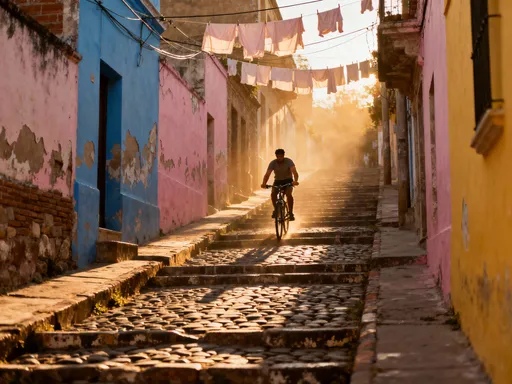
Walking through Bo-Kaap feels like stepping into a painting. This historic neighborhood, nestled on the slopes of Signal Hill, is famous for its brightly colored houses—candy pink, turquoise blue, sunflower yellow—set against cobblestone streets and Islamic archways. Originally home to enslaved people from Malaysia, Indonesia, and other parts of Africa, Bo-Kaap is a living testament to cultural resilience and identity. Today, its vibrant aesthetics attract photographers from around the world, but the true beauty lies in the everyday life that unfolds within its alleys.
Street photography here must be approached with sensitivity. Many residents are proud of their heritage but value privacy. Always ask permission before photographing people, especially in doorways or courtyards. A smile, a nod, or a simple gesture can go a long way in building trust. When portraits aren’t possible, focus on architectural details: ornate door knockers, flower pots on window sills, or sunlight casting geometric shadows through wrought-iron railings. These elements convey the spirit of the neighborhood without intrusion.
The best light occurs in the late morning and early afternoon, when the sun climbs high enough to illuminate the facades without creating harsh contrasts. Overcast days can also work well, as the soft, even light enhances the saturation of colors. Use a polarizing filter to deepen blue skies and reduce reflections on painted walls. For wider compositions, include the cityscape of Cape Town in the background, visible through gaps between houses, to add geographical context.
Don’t overlook the cultural significance behind the colors. While there’s no official rule, many locals repaint their homes in bright hues during festive seasons or after major life events, turning the neighborhood into a canvas of celebration. Photographing Bo-Kaap isn’t just about capturing color—it’s about honoring a community that has preserved its identity through generations. When done with respect, your images can become tributes to both beauty and heritage.
Kirstenbosch Gardens & Silvermine Nature Reserve: Nature in Focus
For those seeking serenity and botanical wonder, Kirstenbosch National Botanical Garden and Silvermine Nature Reserve offer some of the most peaceful and photogenic green spaces in Cape Town. Kirstenbosch, located on the eastern slopes of Table Mountain, is renowned for its curated displays of indigenous fynbos, proteas, and cycads. The garden is designed to blend seamlessly with the natural landscape, making it a paradise for macro and landscape photographers alike.
Spring and early summer (August to November) are peak seasons, when the proteas bloom in fiery reds and pinks, and the air hums with bees and birds. Early morning visits allow you to photograph dew-covered petals and mist drifting through tree canopies. Use a macro lens to capture intricate details: the fuzzy texture of a restio stem, the spiral pattern of a protea bloom, or the delicate wings of a passing butterfly. A tripod helps maintain stability at close range, especially in low light.
The garden’s layout includes pathways that lead to scenic overlooks, the iconic Boomslang canopy walkway, and a fragrant herb garden. The elevated walkway offers a unique perspective—shoot downward through the leaves for layered compositions, or frame distant mountain ridges through the branches. Backlighting, when the sun shines through translucent foliage, creates a glowing effect that elevates simple plant shots into artistic expressions.
Nearby, Silvermine Nature Reserve provides a wilder alternative. Less manicured than Kirstenbosch, it features open fynbos plains, rocky outcrops, and a reservoir surrounded by hills. The lack of crowds makes it ideal for meditative photography. Use the changing light throughout the day to explore different moods: cool blue tones in the morning, golden warmth at sunset. Reflections on the dam’s surface offer symmetrical compositions, while wind-blown grasses add motion to still scenes. Both locations remind us that beauty thrives not only in grand vistas but in the quiet details of the natural world.
Framing the Soul of Cape Town
Cape Town’s magic lies not just in its postcard views, but in the way it makes you feel when you’re standing in its presence. The best photographs from this city aren’t those with perfect exposure or sharp focus—they’re the ones that carry emotion. They remind you of the wind on your face as you watched the sun dip below the ocean, the laughter of children echoing through a colorful alley, or the quiet awe of seeing a penguin return to its burrow at dusk.
Photography here is an act of mindfulness. It asks you to slow down, to notice the interplay of light and shadow, to listen to the rhythm of the waves, and to respect the people and places you’re capturing. The most powerful images emerge when technical skill meets emotional awareness—when you’re not just taking a photo, but connecting with a moment.
Whether you’re perched on a mountain ridge, crouched beside a tidal pool, or wandering through a historic neighborhood, Cape Town offers endless inspiration. It rewards preparation—checking weather, timing your visits, choosing the right gear—but it also honors spontaneity. Some of the most unforgettable shots happen by accident: a sudden rainbow over the bay, a flock of birds scattering across the sky, or a local artisan pausing mid-craft to smile at the camera.
As you compile your collection of Cape Town images, remember that each one is more than a visual record. It’s a story. It’s a memory. It’s a tribute to a city that dares to be beautiful in every season, in every light, in every corner. So charge your camera, lace up your shoes, and let the journey unfold. In Cape Town, every frame doesn’t just feel like a dream—it becomes one.