Lost in Amman’s Stone Stories — And How to Find Your Way Like a Local
Amman isn’t just a city of sandstone and hills—it’s a living archive etched in limestone, where every landmark breathes history. From the Roman Theater carved into the hillside to the whispers of time in the Citadel’s ruins, Amman’s iconic structures are more than photo ops—they’re gateways to understanding a culture shaped by empires, resilience, and quiet pride. Knowing how to experience them transforms a simple visit into something deeper. You don’t just see these places—you feel them. For travelers seeking connection, context, and clarity, navigating Amman becomes not about ticking off sights, but about listening to the stories embedded in its stone. This guide offers practical insight, historical grounding, and emotional resonance to help visitors move through the city with purpose and presence.
The First Glimpse: Arriving in Amman and Reading the City’s Architectural Language
As the plane descends toward Queen Alia International Airport, a landscape of golden hills unfolds beneath the wings. The first view of Amman reveals a city built not against nature, but with it—terraced into seven undulating hills, its buildings glowing in warm-toned limestone that seems to absorb and reflect sunlight like ancient parchment. This distinctive hue is not by accident. The city’s architectural identity is rooted in its geology. Jordan’s abundance of soft limestone, easily quarried and carved, has shaped Amman’s skyline for centuries. Even modern buildings adhere to municipal guidelines that preserve the stone aesthetic, creating a rare urban continuity between old and new.
Walking through downtown or climbing the streets of Jabal Amman, observant travelers begin to notice subtle differences in form and detail—curved Hellenistic columns beside pointed Islamic arches, Ottoman-era homes with arched windows and wooden balconies nestled beside contemporary concrete structures. These are not random juxtapositions but deliberate markers of time. Each architectural style tells a chapter in the city’s long narrative: Greek influence from the Nabataean and Roman periods, Islamic expansions during the Umayyad and Abbasid caliphates, Ottoman administrative rule, and modern nation-building. Understanding these visual cues allows visitors to read Amman like a historical manuscript, where walls and doorways serve as sentences in a story centuries in the making.
What might initially appear as urban sprawl reveals itself as a layered tapestry when viewed through this lens. The city does not erase its past; it builds upon it. Foundations from ancient settlements often support modern homes. Roman roads still trace faint lines beneath asphalt. This continuity is not just physical—it reflects a cultural mindset of preservation, adaptation, and quiet dignity. For the thoughtful traveler, especially one attuned to history and heritage, learning to recognize these architectural whispers enhances every step through the city. It shifts the experience from passive observation to active engagement, where each building becomes a conversation partner in understanding how Amman has evolved without losing its soul.
Roman Theater: More Than Just Steps—Understanding Scale, Sound, and Survival
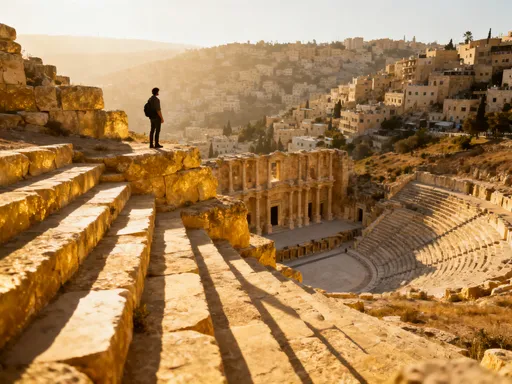
At the heart of downtown Amman, nestled into the eastern hillside, lies one of the city’s most iconic landmarks—the Roman Theater. Built in the 2nd century CE under Emperor Antoninus Pius, this grand amphitheater once seated approximately 6,000 spectators. Today, it stands as a testament to Roman engineering and Jordan’s enduring commitment to preserving its layered past. The theater was originally carved directly into the living rock, a technique that ensured stability and acoustical precision. Even now, a person standing at the center of the stage can be heard clearly at the topmost row, a phenomenon that never fails to astonish first-time visitors. This acoustic miracle is not magic, but meticulous design—proof of how advanced Roman architects were in understanding sound dynamics within large public spaces.
The theater’s orientation—facing east—was intentional, allowing performances to be illuminated by morning light while shielding audiences from the afternoon sun. Its semicircular design, tiered seating, and central orchestra pit follow classical Greco-Roman models, yet it also reflects local adaptation. Unlike theaters in Greece or Italy, which were often freestanding, Amman’s version was integrated into the natural slope, reducing construction effort and enhancing structural integrity. Over the centuries, the site has served various purposes: a venue for theatrical performances in antiquity, a source of building materials during periods of decline, and today, a cultural hub hosting music festivals, national celebrations, and theatrical revivals. This repurposing underscores Jordan’s approach to heritage—not as frozen relics, but as living elements of national identity.
For visitors, timing is key. Arriving early in the morning—ideally between 8:00 and 9:30 a.m.—ensures cooler temperatures, softer light for photography, and fewer crowds. From the top row, the panoramic view includes surrounding neighborhoods and the bustling downtown below, offering a powerful sense of place. Guides often demonstrate the acoustics by whispering from the stage, a moment that invariably draws smiles and murmurs of wonder. Combining a visit with nearby attractions—the Jordan Museum, the Nymphaeum, or the bustling downtown souq—creates a rich half-day itinerary. More than just a sight to photograph, the Roman Theater invites contemplation: what voices echoed here two millennia ago? What stories were told? And how does a society honor its past while moving forward?
The Citadel (Jabal al-Qala’a): Where Civilizations Overlap on One Hilltop
Rising above the city on one of Amman’s highest hills, the Citadel—known locally as Jabal al-Qala’a—offers more than sweeping views. It is a microcosm of human civilization, where layers of history are stacked like pages in a book. Archaeological evidence confirms that this site has been inhabited for over 7,000 years, making it one of the oldest continuously occupied urban centers in the world. Each major empire that ruled the region left its mark: Bronze Age fortifications, Roman temples, Byzantine churches, Umayyad palaces, and Ottoman watchtowers all coexist within a compact area of less than 20 acres. The most prominent remains include the Temple of Hercules, a partially reconstructed colonnade from the 2nd century CE, and the Umayyad Palace complex, whose grand hall and circular tower hint at the administrative importance of the site during early Islamic rule.
What makes the Citadel extraordinary is not just its antiquity, but the way different civilizations built upon—rather than erased—what came before. Roman columns were reused in Islamic structures. Byzantine mosaics lie beneath Umayyad floors. This architectural recycling speaks to practicality, but also to a cultural respect for continuity. The on-site museum, though modest in size, houses significant artifacts, including a 9-meter-tall statue of Hercules’ hand and forearm, believed to have been part of a colossal seated figure in the temple. Informational plaques provide context in both Arabic and English, helping visitors interpret the ruins with greater depth.
The view from the summit connects past and present. To the east, the modern skyline of Abdali and the glittering towers of West Amman contrast with the ancient stone foundations beneath one’s feet. To the west, the hills roll into the distance, dotted with homes that still use the same limestone construction methods as their ancestors. Late afternoon is the ideal time to visit—not only to avoid the midday heat, but to witness the golden hour light washing over the ruins, emphasizing texture and shadow. For families and older travelers, shaded seating areas and clear pathways make exploration comfortable. The Citadel is not merely a collection of old stones; it is a place where time feels compressed, where standing in one spot allows you to touch millennia of human endeavor.
King Abdullah I Mosque: A Modern Icon with Quiet Grandeur
Dominating the downtown skyline with its striking cobalt-blue dome, the King Abdullah I Mosque is one of Amman’s most recognizable landmarks. Completed in 1989, it serves as both a place of worship and a symbol of national identity. Unlike many historic mosques, which are tucked into narrow alleys or surrounded by dense markets, this one occupies a prominent position near Hashemite Plaza, making it accessible and visible to residents and visitors alike. Its large capacity—able to accommodate up to 7,000 worshippers—reflects the growing needs of the capital’s population, while its architectural style blends traditional Islamic elements with modern design sensibilities.
The mosque’s most distinctive feature is its 35-meter-high blue dome, inspired by Ottoman architectural traditions but executed with contemporary materials and precision. Inside, the main prayer hall is vast and serene, illuminated by natural light filtering through high windows and complemented by elegant chandeliers. The walls are adorned with geometric mosaics and Quranic calligraphy in gold leaf, creating a space of quiet reverence. Non-Muslim visitors are permitted to enter outside of prayer times, typically between 10:00 a.m. and 11:30 a.m. and again from 2:00 p.m. to 3:30 p.m., provided they dress modestly—women must cover their heads, and both men and women should wear clothing that covers shoulders and knees.
Guided tours are available and highly recommended, offering insight into the mosque’s construction, religious significance, and role in Jordanian society. What stands out is the atmosphere of dignity and calm. Unlike tourist-heavy sites where crowds rush in and out, the mosque encourages reflection. Visitors often remark on the peaceful acoustics, the cool marble floors, and the sense of order within. For women travelers, particularly those in the 30–55 age group seeking meaningful cultural experiences, the mosque offers a chance to witness contemporary Islamic life with respect and sensitivity. It reminds us that heritage is not only found in ruins, but also in living traditions—spaces where faith, architecture, and community converge.
Hidden in Plain Sight: Lesser-Known Landmarks That Tell Bigger Stories
Beyond the headline attractions, Amman harbors quieter sites that deepen one’s understanding of its urban fabric. These are not grand monuments, but subtle witnesses to daily life across centuries. One such site is the Roman Nymphaeum, located in the heart of downtown. Originally a public fountain dedicated to water nymphs, it served as a social hub where citizens gathered, drank, and exchanged news. Though only partially preserved, its ornate façade and remaining columns evoke the Roman emphasis on civic beauty and utility. Positioned near the Roman Theater, it fits naturally into a walking tour, requiring only ten minutes to appreciate—but offering insight into how ancient cities prioritized public amenities.
Another underappreciated gem is the Jordan Museum, situated near the Roman Theater. While larger museums in other capitals may overshadow it, this modern institution plays a crucial role in contextualizing Jordan’s heritage. Its star exhibit is the ‘Ain Ghazal statues—life-sized plaster figures dating back 9,000 years, among the oldest human representations ever discovered. The museum also displays artifacts from Petra, Jerash, and the Dead Sea Scrolls, providing a chronological journey through the region’s civilizations. For families, interactive displays and clear signage make it accessible and educational without being overwhelming.
Further off the beaten path are remnants of ancient city gates and defensive walls, some visible near the Hashemite Plaza or embedded in modern buildings. These fragments remind visitors that Amman was once a fortified city, vulnerable to regional conflicts and trade route shifts. Though not labeled or heavily promoted, noticing them adds a layer of discovery to exploration. Including these sites in an itinerary does not require extra days—just a shift in attention. By pausing to notice the small details, travelers gain a fuller picture of how urban life has evolved: not through dramatic ruptures, but through gradual adaptation, reuse, and resilience.
Navigating the Hills: Practical Tips for Moving Between Sites Efficiently
Amman’s hilly topography, while beautiful, presents real challenges for mobility. The city’s nickname—“the city of seven hills”—is more than poetic; it affects how visitors experience the urban landscape. Walking between sites can be strenuous, especially during summer months when temperatures rise. However, with thoughtful planning, movement through the city can be efficient and even rewarding. The key is to group visits by proximity and elevation, minimizing uphill climbs and unnecessary backtracking.
Ride-hailing apps like Uber and Careem operate reliably in Amman and are often the most convenient option for moving between districts. Fares are reasonable, and drivers are generally courteous and knowledgeable. For budget-conscious travelers, public minibuses—locally known as *servees*—connect major areas, including downtown, the Citadel, and West Amman. These white vans follow fixed routes and are inexpensive, though signage is primarily in Arabic and schedules can be irregular. Asking a hotel staff member to write down your destination in Arabic can ease communication.
When walking, proper footwear is essential. Streets are often uneven, and sidewalks may be narrow or absent. Sturdy, closed-toe shoes with good grip are recommended. Hydration is equally important—carrying a reusable water bottle and refilling at hotels or cafes helps prevent fatigue. Timing matters too: scheduling outdoor visits for early morning or late afternoon avoids the midday heat and harsh sunlight. For those with limited mobility, taxis or private drivers can be hired for half-day or full-day tours, offering flexibility and comfort. The goal is not to rush through sights, but to experience them sustainably—preserving energy for what matters most: connection, observation, and reflection.
Seeing Beyond Stone: How to Connect with Amman’s Living Heritage
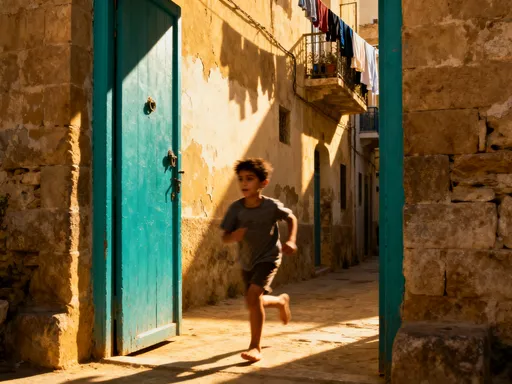
Monuments are silent without people. While the Roman Theater, the Citadel, and the King Abdullah I Mosque are awe-inspiring in their physical presence, their true meaning emerges through human interaction. For travelers seeking depth, the most memorable moments often occur not at the sites themselves, but in the spaces between—sipping mint tea at a sidewalk café near the souq, listening to an elderly guide recount family stories, or watching children play near ancient columns. These everyday scenes animate history, showing how the past is not buried, but lived.
Engaging with local guides—especially women-run tour cooperatives or certified heritage interpreters—adds richness to any visit. Their narratives go beyond dates and dynasties, offering personal perspectives on identity, change, and pride. Many share stories passed down through generations, connecting ancient ruins to modern values. Visiting neighborhood cafes near historic sites allows travelers to observe how residents integrate heritage into daily life. In Jabal Amman, for instance, young professionals work in restored Ottoman houses turned into art galleries or boutique offices, blending old and new in seamless harmony.
For reflective travelers, keeping a journal or sketching architectural details can deepen memory and understanding. Noting the curve of an arch, the pattern of a mosaic, or the way sunlight hits a stone wall transforms passive observation into active learning. These small acts of attention foster a sense of intimacy with the city. Ultimately, visiting Amman’s landmarks is not about completing a checklist. It is about entering into a quiet dialogue with time—listening to the echoes of empires, recognizing resilience in repurposed stones, and feeling the pulse of a culture that honors its past while building its future. When approached with curiosity and respect, Amman reveals itself not as a city of ruins, but as a living story, still being written in stone.